
Cupping can feel deeply relieving for some people: warmth, gentle pressure, and a sense that tight or stagnant areas finally have room to soften. But a good treatment is never about applying a technique simply because it is available. If you are asking when should you avoid cupping, the most helpful answer is this: avoid it whenever the treatment could compromise your physical safety, overwhelm your nervous system, or work against the care your body needs right now.
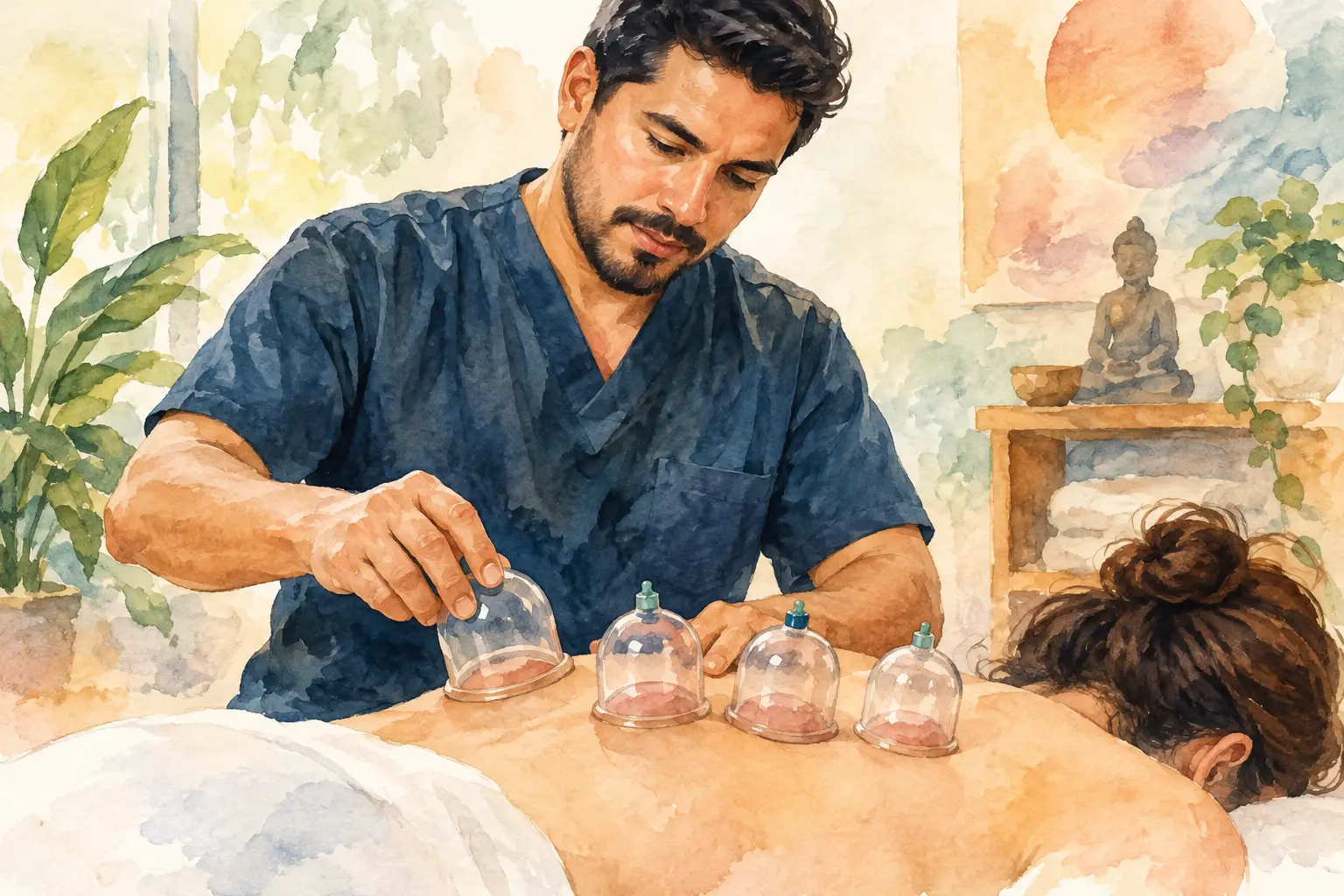
Cupping is a Traditional Chinese Medicine modality in which cups create suction on the skin. Depending on the approach, the cups may stay in one place or glide slowly with oil. It can be used to support muscular tension, circulation, recovery, and a sense of ease. The familiar circular marks are temporary and are not bruises in the conventional sense, though they can look and feel tender afterward.
A careful practitioner will assess whether cupping is appropriate before treatment, explain what to expect, and make room for you to change your mind. That conversation matters as much as the technique itself.
When should you avoid cupping completely?
There are situations where cupping should generally be postponed or avoided. The skin must be intact and healthy where cups would be placed. Avoid cupping over open wounds, sunburn, rashes, hives, eczema or psoriasis flare-ups, active acne, skin infections, recent scars, or areas that are irritated or unusually sensitive. Suction can further aggravate damaged skin and may increase the risk of infection.
Cupping is also not appropriate directly over fractures, acute strains with significant swelling, inflamed joints, large varicose veins, or areas where there is a known blood clot. If you have symptoms that could suggest a deep vein thrombosis, such as one-sided leg swelling, warmth, redness, and pain, seek urgent medical assessment rather than bodywork. Cupping is not a substitute for medical care in that situation.
People with bleeding disorders, very low platelet counts, or unexplained easy bruising should speak with their physician and practitioner before considering cupping. The same applies if you take anticoagulant or antiplatelet medication, including prescription blood thinners. Even gentle suction may cause more pronounced marks or skin injury when clotting is affected.
If you have a fever, a contagious illness, or are feeling acutely unwell, rest and medical guidance are usually the better choice. Your body is already directing energy toward recovery. A treatment can wait until you are feeling more stable.
Cupping may need to be modified, not ruled out
Many health considerations do not automatically mean that all cupping is off limits. They do mean that treatment needs more care, and sometimes a different modality is the wiser option.
Pregnancy is one example. Cupping may be adapted in certain circumstances by a qualified practitioner, but it is generally avoided over the abdomen and low back, and pressure, placement, and timing all matter. If you are pregnant, especially if your pregnancy is high-risk or you have had complications, your prenatal care provider should be part of the conversation.
Cancer care, recent surgery, diabetes with reduced sensation or slow healing, significant cardiovascular conditions, and immune suppression also call for individualized assessment. A practitioner may decide to use fewer cups, lighter suction, shorter treatment time, or another gentle approach altogether. Areas affected by surgery, radiation, lymphedema, or lymph-node removal require particular caution.
It is worth distinguishing dry cupping from wet cupping. Dry cupping uses suction without breaking the skin. Wet cupping involves superficial skin incisions and carries additional considerations around infection control, bleeding, and medical history. If you are considering any form of cupping, ask clearly which method is being offered and why it is suitable for you.
Your nervous system is part of the safety assessment
Physical contraindications are only one part of the picture. Cupping can create strong sensations: pulling, heat, pressure, and visible marks that last for several days. For someone with a history of trauma, body-based treatment can occasionally bring up discomfort, vulnerability, or a feeling of being trapped in a sensation.
That does not mean trauma survivors cannot receive cupping. It means consent must be ongoing and specific. You should know where cups will be placed, how long they will stay on, what the sensation may feel like, and that you can ask for less suction, a pause, or an immediate stop without needing to justify yourself.
A regulated treatment pace can make all the difference. Some people prefer to begin with one or two cups over clothing-free areas they feel comfortable exposing, or to choose Tuina massage, acupuncture, or simple calming techniques instead. There is no prize for tolerating an intense treatment. The goal is to support integration, not push the body past its sense of safety.
When the marks themselves are not a good fit
Cupping marks can range from light pink to deep purple, depending on your skin tone, circulation, suction level, and the condition of the tissue. They typically fade over several days to two weeks. While these marks are expected, they can be impractical before an event, a photoshoot, a vacation, or any time you would rather not have visible changes on your skin.
This is a valid reason to postpone. You do not need a medical contraindication to decline a treatment that does not fit your life or comfort level. If you are unsure how your skin will respond, a practitioner can use very light suction in a less visible area or recommend another treatment option.
Cupping should also be reconsidered if you had a difficult response previously, such as prolonged soreness, blistering, dizziness, faintness, anxiety, or marks that did not resolve as expected. Mild tenderness can occur, but severe pain or blistering is not something to ignore. Tell your practitioner before another session so the approach can be reassessed.
What an informed cupping conversation sounds like
Before treatment, a practitioner should ask about your current health, medications, skin condition, pregnancy status where relevant, and previous response to bodywork. You should feel welcome to mention concerns that may seem unrelated, including fatigue, anxiety, a history of fainting, or worry about the marks.
It is also reasonable to ask what benefit the practitioner hopes cupping will offer in your particular case. Cupping is not a cure-all, and it should not be framed as a way to remove toxins or replace appropriate medical evaluation. It may be one supportive tool within a broader care plan for muscle tension, stress, pain, or recovery.
At One Love Acupuncture Therapy, treatment decisions are made collaboratively. A slower, gentler session is often more therapeutic than applying more intensity. Sometimes that means using minimal suction. Sometimes it means choosing acupuncture, Tuina, rest-focused care, or no hands-on modality at all.
Aftercare and signs to check in
After dry cupping, drink water as you normally would, keep the treated area warm and comfortable, and avoid intense heat or vigorous exercise if you feel tender or lightheaded. Give your body a little space to settle. Most people can return to their usual day, but it is sensible to plan a quieter evening after a first treatment so you can notice how you feel.
Contact your practitioner if you have questions about your response. Seek medical attention for signs of infection, worsening redness and heat, severe or persistent pain, extensive blistering, unusual swelling, fainting, or any symptom that feels concerning. Your instincts deserve respect.
The right time for cupping is not determined by a trend, a dramatic mark, or a promise of quick relief. It is the time when your health history has been considered, your consent is clear, and your body has enough safety and capacity to receive it gently.

Leave a Reply